

China's Industrial Economy Begins Year Of The Tiger With Vigor
Facing multiple challenges in 2022, Rong Juchuan, founder of the Beyond Group, a textile company headquartered in Ningbo, East China's Zhejiang province, said the company "can't just wait, but should take the initiative."
Fl-2022, il-kumpanija se tipprijoritizza t-titjib tal-kapaċitajiet diġitali tagħha u l-lieva ta’ kanali ta’ bejgħ ġodda bħal pjattaformi live-streaming biex tnaqqas l-ispejjeż operattivi u tisfrutta d-domanda potenzjali, qal Rong.
Recent economic data has echoed such enthusiasm for business. The purchasing managers' index (PMI) for China's manufacturing sector, a key economic barometer, came in at 50.1 in January, staying in the expansion territory for three months in a row.
In particular, manufacturing companies' confidence was on the rise, with the sub-index for production and operation activity expectations at 57.5, up 3.2 percentage points from a month earlier.
China's economic performance in the first quarter is expected to beat market expectations, said Li Chao, chief economist of Zheshang Securities, citing a PMI remaining above the boom-bust line for three consecutive months and steady credit growth.
The resilience of China's industrial economy was also reflected in other barometers, including the total consumption of electricity.
One of the country's industrial powerhouses, East China's Jiangsu province, saw its total electricity use rise 18.27 percent year-on-year during the holiday, while Hubei, a key manufacturing base in China, reported a 36.45-percent year-on-year increase in power use.
According to an estimate of the China Electricity Council, the country's total electricity consumption will rise by 5 percent to 6 percent year-on-year in 2022.
In the face of headwinds such as high commodity prices and supply chain challenges, China has prioritized stable growth for industrial development in 2022, which is the "ballast stone" of the macroeconomic market.
Xiao Yaqing, ministru tal-industrija u t-teknoloġija tal-informazzjoni, qal f'intervista preċedenti ma 'Xinhua li l-iżgurar ta' tkabbir industrijali stabbli, partikolarment bidu tajjeb fl-ewwel kwart tal-2022, għandu jiġi stabbilit bħala l-aktar kompitu importanti.
Biex tiġi żgurata espansjoni stabbli, ġew implimentati diversi miżuri inkluż it-tisħiħ tal-iżvilupp ta' intrapriżi żgħar u ta'-daqs medju, it-titjib tar-reżiljenza tal-katina tal-provvista, u l-għoti sħiħ tar-rwol ta' setturi emerġenti bħall-vetturi tal-enerġija ġodda (NEVs) .
The ministry aims to incubate about 3,000 "little giant" firms this year, referring to small enterprises in their early stage of development and focusing on high-end technologies.
"In 2022, more importance will be attached to promoting collaboration and innovation among small, medium-sized and large enterprises," said Xu Xiaolan, vice-minister of industry and information technology.
The NEV market could be another driving force shoring up China's industrial growth. The country's NEV sales ranked first globally for a seventh straight year in 2021.
B'ħarsa 'l quddiem, iċ-Ċina għandha l-għan li tiffaċilita aktar it-tkabbir ta' dan is-settur li qed jisplodu billi ttaffi n-nuqqas ta 'ċippa, ittejjeb faċilitajiet ta' appoġġ bħal stazzjonijiet ta 'skambju ta' batteriji, u twettaq ir-riċiklaġġ u l-utilizzazzjoni ta 'batteriji tal-enerġija NEV.
Prodotti Popolari
-
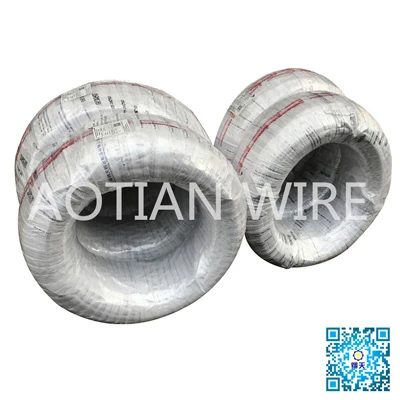
![SAE1008 għal viti u rivets]() SAE1008 għal viti u rivetsWajer tal-azzar b'livell baxx ta 'karbonju mfassal kiesaħ huwa magħmul minn kolji ordinarji tal-karbonju rrumblat...Aktar
SAE1008 għal viti u rivetsWajer tal-azzar b'livell baxx ta 'karbonju mfassal kiesaħ huwa magħmul minn kolji ordinarji tal-karbonju rrumblat...Aktar -
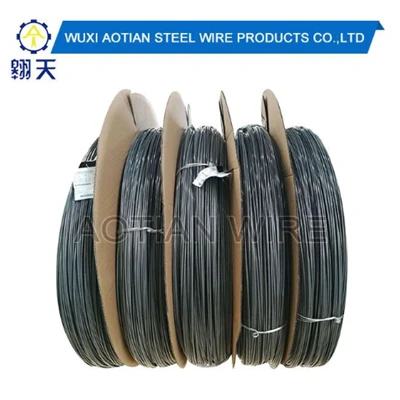
![Wajer imfassal kiesaħ ch1t]() Wajer imfassal kiesaħ ch1tCH1T huwa tip ta 'azzar strutturali tal-liga, li għandu ebusija xierqa, u wara trattament tas-sħana tal-metall...Aktar
Wajer imfassal kiesaħ ch1tCH1T huwa tip ta 'azzar strutturali tal-liga, li għandu ebusija xierqa, u wara trattament tas-sħana tal-metall...Aktar -
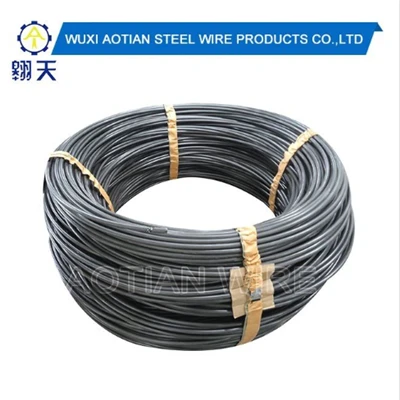
![Wajer tal-azzar SCR420]() Wajer tal-azzar SCR420Titlu kiesaħ tal-wajer tal-azzar SCR420 bil-kundizzjoni SAIP, prinċipalment użat għall-produzzjoni tal-viti.Aktar
Wajer tal-azzar SCR420Titlu kiesaħ tal-wajer tal-azzar SCR420 bil-kundizzjoni SAIP, prinċipalment użat għall-produzzjoni tal-viti.Aktar -
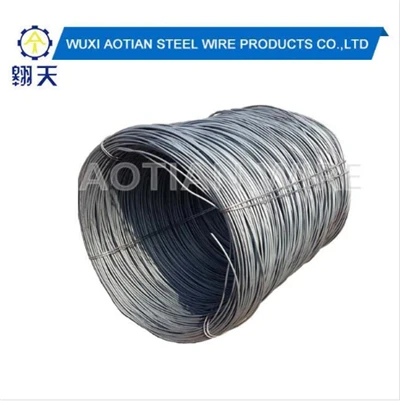
![Wire Rod SWRCH22A]() Wire Rod SWRCH22AKwalità Baxxa tal-Karbonju 6.5mm SWRCH22A Steel Wire Rod Bi Prezz Tajjeb, Il-virga tal-wajer għandha firxa wiesgħa...Aktar
Wire Rod SWRCH22AKwalità Baxxa tal-Karbonju 6.5mm SWRCH22A Steel Wire Rod Bi Prezz Tajjeb, Il-virga tal-wajer għandha firxa wiesgħa...Aktar
Ibgħat l-inkjesta